How to Choose Educational Toys That Kids Actually Want to Play With
The best learning toys don't feel like lessons. Here's a simple, parent-tested way to pick educational toys that build real skills — and still get played with after the first week.

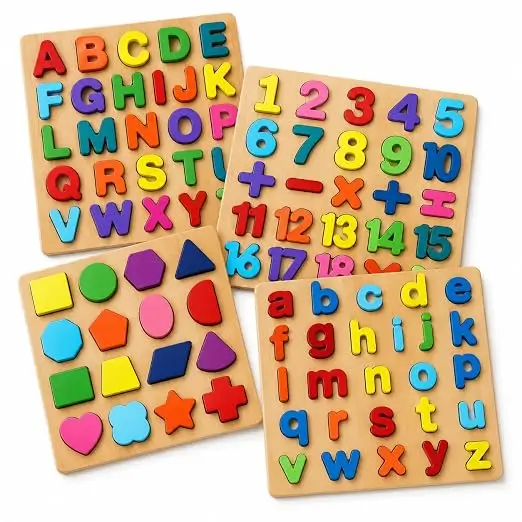
Walk down any toy aisle and almost everything claims to be “educational”. The truth is simpler: a toy teaches when a child chooses to play with it again and again. This guide will help you spot the toys that genuinely build skills, without turning playtime into homework.
What makes a toy truly educational?
Good learning toys share a few traits. They leave room for the child to decide what happens next, they grow in difficulty as skills improve, and they invite talking, sorting, building or pretending rather than just pressing a button.
- Open-ended: blocks, puzzles and craft kits can be used in many ways, so they stay interesting for longer.
- Just-right challenge: slightly hard is motivating; far too hard is frustrating.
- Hands-on: touching, stacking and fitting pieces together builds fine motor skills alongside thinking skills.
- Shared play: toys that invite a parent or sibling to join in also build language and patience.
Match the toy to the skill you want to grow
Instead of buying “educational toys” in general, think about one skill your child is working on right now.
| Skill | Toys that help |
|---|---|
| Early letters and numbers | Wooden alphabet boards, number puzzles, picture books |
| Fine motor control | Shape sorters, lacing beads, stacking rings, chunky crayons |
| Logic and patterns | Magnetic tiles, pattern puzzles, simple board games |
| Language and social skills | Pretend kitchens, puppets, role-play sets |
| Curiosity about how things work | Beginner science kits, building sets, simple circuits |
For example, a wooden alphabet, number and shape board is a great fit for a two-year-old who is starting to name letters, while magnetic mosaic tiles suit a five-year-old who loves copying patterns.
Five questions to ask before you buy
- Can my child play with this in more than one way?
- Will it still be interesting in three months?
- Is it right for their age and stage — not just the age printed on the box?
- Does it need batteries or a screen to be fun? (If so, will it hold attention once the novelty fades?)
- Is it well made, with no loose small parts for under-threes?
Parent tip: rotate toys. Put half of them away and swap every couple of weeks. “Old” toys feel new again, and children play more deeply with fewer choices in front of them.
Make any toy more educational
The toy is only half the story — how you play matters just as much. Ask open questions (“What do you think will happen if…?”), let your child lead, and resist the urge to fix mistakes straight away. Struggling a little with a puzzle is exactly where the learning happens.
Watch out for “educational” marketing
Labels like “brain-boosting”, “genius” or “makes your child smarter” are marketing, not evidence. Be cautious of toys that promise specific results, such as reading by a certain age. Instead, look at how the toy is actually played with. If it does all the work, with flashing lights and sounds after every press, your child may learn less than with a simple set of blocks.
Learning through play at every age
- Babies: learn through their senses. Rattles, textured toys and board books are their first lessons.
- Toddlers: learn cause and effect and early language. Shape sorters, stacking toys and simple puzzles are ideal.
- Preschoolers: learn through pretend play, early counting and letters. Role-play sets and matching games shine here.
- School-age children: learn through challenges, rules and projects. STEM kits, brain games and board games stretch their thinking.
Screens and learning apps
Learning apps can be useful in small doses, especially for older children, but hands-on play builds skills that screens can’t, such as fine motor control, spatial awareness and back-and-forth conversation. If you do use apps, choose ones without adverts or in-app purchases, set a time limit and, where you can, play alongside your child and talk about what they’re doing.
Make toys last longer
Educational toys only work if they get played with. Store sets in labelled boxes so pieces don’t go missing, rotate toys so they stay interesting, and pass on toys your child has outgrown to a younger friend or relative. Seeing a younger child enjoy an old favourite can be a lovely lesson in itself.
The bottom line
Choose toys that are open-ended, sized to your child’s current skills and fun enough to come back to. Browse our hand-picked Educational & STEM and Puzzles & Brain Games collections for ideas that tick these boxes.