The Age-by-Age Toy Guide: What to Buy From Birth to 10 Years
Not sure which toys suit your child's stage? Our age-by-age guide covers what children enjoy, which skills they're building and the toys that fit best — from newborn to ten.

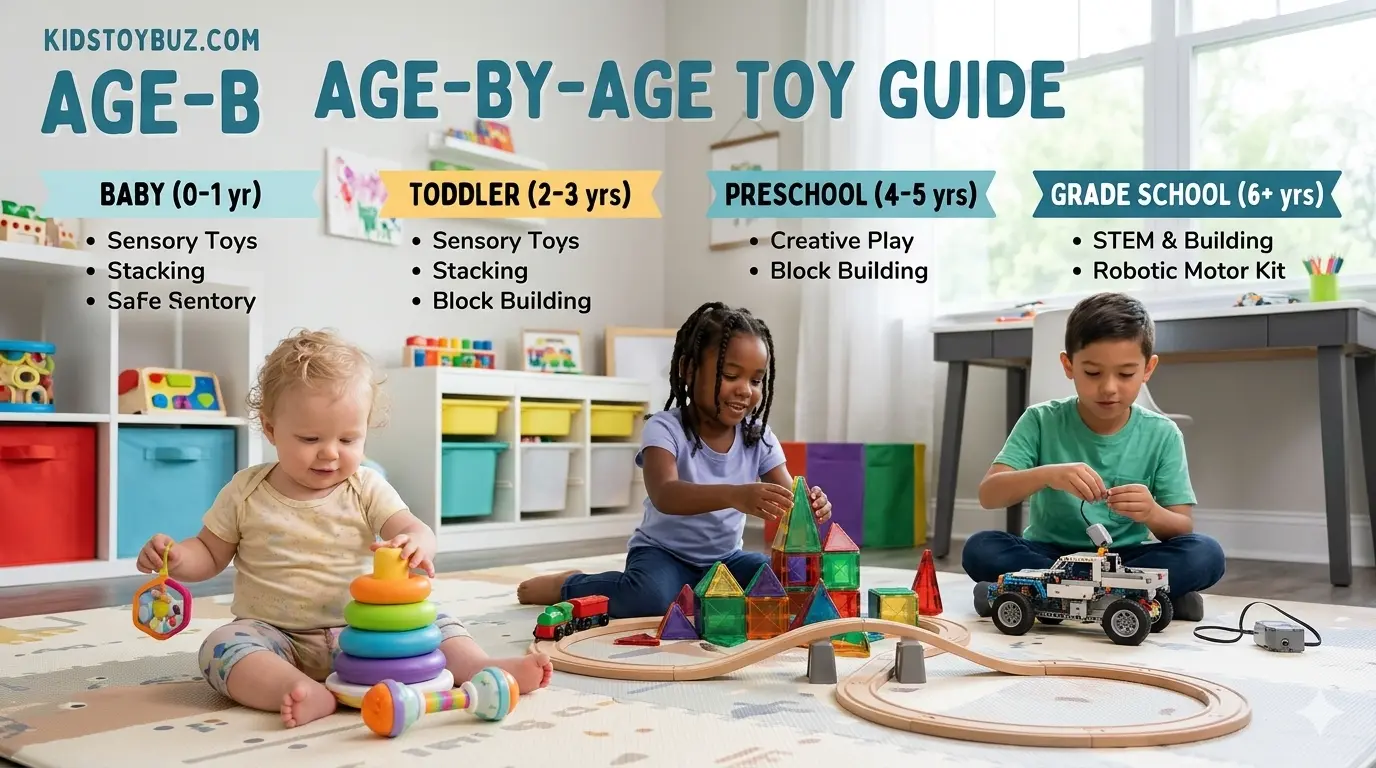
The age on a toy box is a helpful starting point, but children develop at their own pace. Use this guide to understand what your child is working on at each stage — then pick toys that meet them where they are.
0–12 months: senses and discovery
Babies learn by looking, listening, grasping and mouthing. Choose toys that are soft, washable and too large to swallow.
- High-contrast cloth books and soft rattles
- Teething rings and textured balls
- Stacking cups and simple activity gyms
- Soft toys without buttons or loose parts
1–2 years: movement and cause-and-effect
Toddlers are on the move and love making things happen. Push-along toys, shape sorters and chunky puzzles are perfect.
- Push and pull toys, ride-ons and early trikes such as a toddler tricycle
- Large building blocks
- Board books with flaps and textures
- Shape sorters and peg puzzles
3–4 years: imagination takes off
Pretend play explodes at this age. Children copy grown-up routines, invent stories and start playing alongside friends.
- Play kitchens and role-play sets like a pretend breakfast set
- Dress-up clothes and puppets
- Washable crayons, chunky paintbrushes and play dough
- Simple matching and memory games
Parent tip: keep a “small parts” rule until your youngest is past three. If an older sibling’s toys have tiny pieces, give them a special shelf or box with a lid.
5–7 years: rules, patterns and early science
Children now enjoy games with rules, building to a plan and asking “why?”. This is a lovely time to introduce beginner STEM kits.
- Magnetic tiles and construction sets
- Beginner science kits such as the Smartivity Magic Science Kit
- Board games that involve counting and taking turns
- Scooters, with a helmet and pads
8–10 years: projects and independence
Older children love a challenge they can finish on their own and show off afterwards.
- Science and electronics project kits
- Detailed craft and model kits
- Strategy games and puzzles
- Sports gear and outdoor equipment
How many toys does a child really need?
Fewer than you might think. Children often play longer and more creatively when they have a small selection to choose from rather than an overflowing toy box. A good mix for most ages includes something to build with, something to pretend with, something creative, something active and a few books.
Try a toy rotation
Divide toys into three or four boxes and keep only one box out at a time. Swap them every week or two. Old favourites feel new again, tidying is easier and you’ll quickly see which toys are genuinely loved and which can be passed on.
Toys for children who develop differently
Every child grows at their own pace, and age labels are only a rough guide. If your child has additional needs, focus on what they enjoy and the skills they are working on now, rather than the age on the box. Toys with clear cause and effect, strong colours and contrasts, different textures, or chunky pieces that are easy to grip often work well. Your child’s therapist or teacher can be a great source of ideas, too.
Toys that grow with your child
Some toys earn their place for years because children use them differently as they grow:
- Building blocks: stacking and knocking down at one, simple houses at three, detailed models at seven.
- Art supplies: scribbles become pictures, then comics and craft projects.
- Board games: simple matching and turn-taking games lead naturally into strategy games.
- Ride-ons and scooters: balance and coordination skills build from a first trike to a two-wheeled scooter.
A note for grandparents and gift-givers
If relatives ask what to buy, a short list grouped by age stage helps them choose something useful and avoids duplicates. Suggest one toy from the stage your child is in now and one from the next stage, so there is always something to grow into.
When the box and your child disagree
If a toy is labelled for an older age, it’s usually because of small parts or safety — follow that guidance. If your child is ready for more challenge, look for a harder toy that is still rated for their age, rather than moving up early. Read our toy safety checklist for more on what to look for.