Toy Safety Checklist: 12 Things Every Parent Should Check Before Buying
From small parts to button batteries, here's a quick, practical toy safety checklist to run through before you buy — and how to keep older toys safe at home.

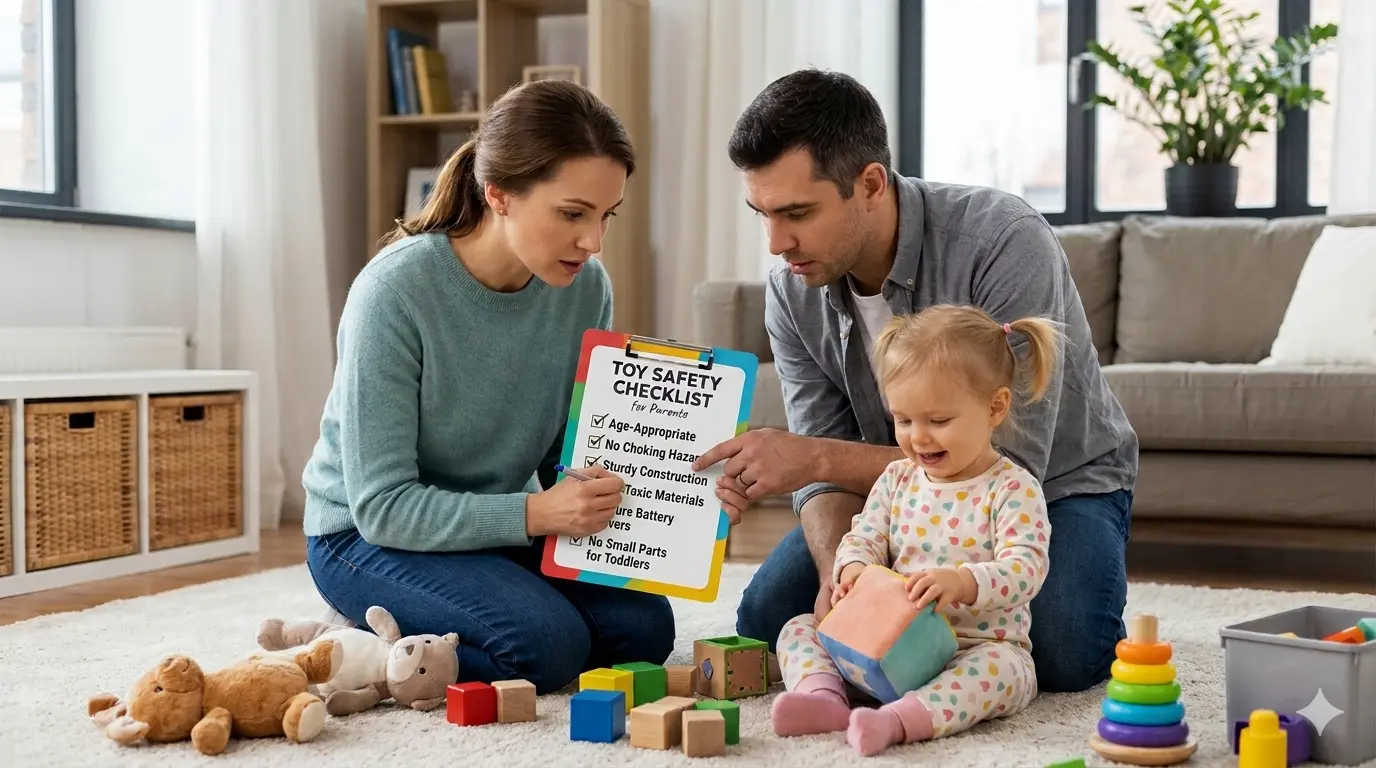
Most toys are perfectly safe when they’re used by the right age group. A quick check before you buy — and every now and then at home — avoids the most common problems. Keep this checklist handy.
Before you buy
- Check the age label. It’s usually about safety (often small parts), not just difficulty.
- Look for certification marks. In India, toys are required to meet BIS standards and carry the ISI mark. Buy from reputable sellers and check the listing details.
- Avoid small parts for under-threes. If a piece fits inside a toilet-roll tube, it’s a choking risk for little ones.
- Check battery compartments. Button and coin batteries should be behind a screw-fastened cover.
- Watch out for strong small magnets. Loose magnets can be very dangerous if swallowed.
- Feel the edges. No sharp points, rough edges or splinters on wooden toys.
- Check cords and strings. Long cords on toys for babies and toddlers can be a strangulation risk.
- Consider noise. Very loud toys held close to the ear can harm young hearing.
Parent tip: keep the packaging and instructions for a week or two. They often contain care and safety information you’ll want later.
At home: ongoing checks
- Inspect regularly. Look for loose eyes or buttons on soft toys, cracks in plastic and loose wheels.
- Store toys safely. Toy boxes should have lightweight lids or no lids at all, and older siblings’ toys should be out of reach of babies.
- Use the right safety gear. Ride-ons, cycles and scooters need a helmet — and pads for faster riding. A protective gear set makes it easy.
- Follow recalls. Register products where possible and look out for recall notices from retailers and brands.
Signs it’s time to throw a toy away
- Exposed stuffing, wires or springs
- Broken pieces that leave sharp edges
- Leaking or swollen batteries
- Peeling paint on toys that go in the mouth
Safety priorities by age
Babies (0–12 months)
Babies explore with their mouths, so anything within reach should be too large to swallow, free of loose parts and easy to wash. Avoid toys with long ribbons or cords, and keep soft toys out of the cot while your baby sleeps.
Toddlers (1–3 years)
Toddlers are curious, fast and great climbers. Small parts remain the biggest risk, so keep older children’s toys separate. Check push-along and ride-on toys for stability, and supervise play near stairs.
Preschool and school-age children
As children get older, the risks shift towards speed and independence: scooters, bikes, trampolines and science kits. A properly fitted helmet, clear rules about where they can ride and adult supervision for any kit involving chemicals or heat go a long way.
Second-hand and hand-me-down toys
Pre-loved toys are a great way to save money and reduce waste, but they deserve an extra look before you pass them on:
- Check that all parts are present and firmly attached, especially eyes and buttons on soft toys.
- Look for cracks, sharp edges and worn paint, particularly on older wooden or painted toys.
- Make sure battery compartments still close securely.
- Wash soft toys and wipe hard toys with mild soapy water before use.
- Be cautious with very old toys, which may not meet today’s safety standards.
Bath and water toys
Squeezy bath toys can trap water and grow mould inside. Choose toys without holes or ones that can be opened and cleaned, rinse them after use and let them dry completely. Always stay with young children in the bath; bath toys are fun, but they are never a substitute for supervision.
Outdoor and ride-on toys
Ride-ons, scooters and trikes bring plenty of fresh air and exercise. Before the first ride, check that the brakes work, the handlebars are tight and the wheels spin freely. Make a helmet part of the routine from day one, so it never becomes a battle, and teach children to ride away from roads, driveways and pools.
If something goes wrong
If you think your child has swallowed a button battery or magnet, seek medical help immediately — don’t wait for symptoms. Keep your local emergency number and your doctor’s details somewhere easy to find.
Shopping for safety essentials? Browse our Protective Gear picks.